Keynote Speaker - Zheng Hu
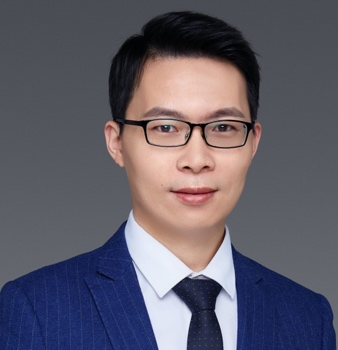 Dr. Zheng Hu
Bio: Dr. Zheng Hu is a Principal Investigator at Shenzhen Institute of Advanced Technology (SIAT), Chinese Academy of Sciences (CAS). He is also the Director of Center for Synthetic Biology and Evolution. Dr. Hu received his B.S. in Biomedical Engineering from Huazhong University of Science and Technology in 2010 and received his Ph.D in Evolutionary Genetics from Beijing Institute of Genomics, Chinese Academy of Sciences in 2015. From 2015 to 2020, he was a IGI Postdoctoral Fellow in Dr Christina Curtis’s lab at Stanford University School of Medicine. Dr Hu’s research interests span from cancer evolution, lineage tracing to computational biology. His research on measuring cancer evolutionary dynamics has yielded novel insights into cancer formation and metastasis, facilitating biomarker discovery for risk prediction and treatment decision making. Dr Hu’s publications as corresponding author or first author include Nature (2024), Nature Reviews Genetics (2026), Nature Biotechnology (2023), Nature Genetics (2020, 2019, 2017), Genome Biology (2025), Cell Systems (2025), etc.
Title: Deciphering Cell Fate and Tumor Evolution with Multimodal Lineage Tracing
Abstract: Understanding how cells commit to distinct fates over time is fundamental to elucidating the principles and mechanisms that govern organismal development, tissue regeneration and disease progression. Multimodal lineage tracing, which couples heritable lineage information with single-cell multi-omics, has revolutionized our ability to chart cellular dynamics and fate decisions at unprecedented resolution. In this talk, I will present our recent efforts in developing experimental lineage tracing technologies and computational methods for multimodal lineage tracing. I will introduce a high-resolution base-editing lineage barcoding system (SMALT/eSMALT) that enable multimodal measurements of lineage and transcriptomic information, revealing previously unrecognized principles of tumor evolution, including the polyclonal-to-monoclonal transition during colorectal tumorigenesis. I will further describe computational frameworks, including PhyloVelo and PhyloFate, for reconstructing ancestral cell states and developmental trajectories by integrating lineage trees with single-cell transcriptomes. Finally, I will discuss our transition map-based foundation model, scTransition, which leverages cellular dynamics to improve trajectory inference, perturbation prediction, and virtual cell modeling, highlighting how dynamic information can empower next-generation AI for developmental biology and precision medicine.
Important Dates
| Submission Deadline |
|
| Notification of Acceptance | April 20 |
| Final Version Due | May 20 |
| Conference | July 22-24 |
Express Channels
Technical Sponsors









{{ 'en' == 'cn' ? item.name : item.name_en }}
{{ 'en' == 'cn' ? item.desc : item.desc_en }}